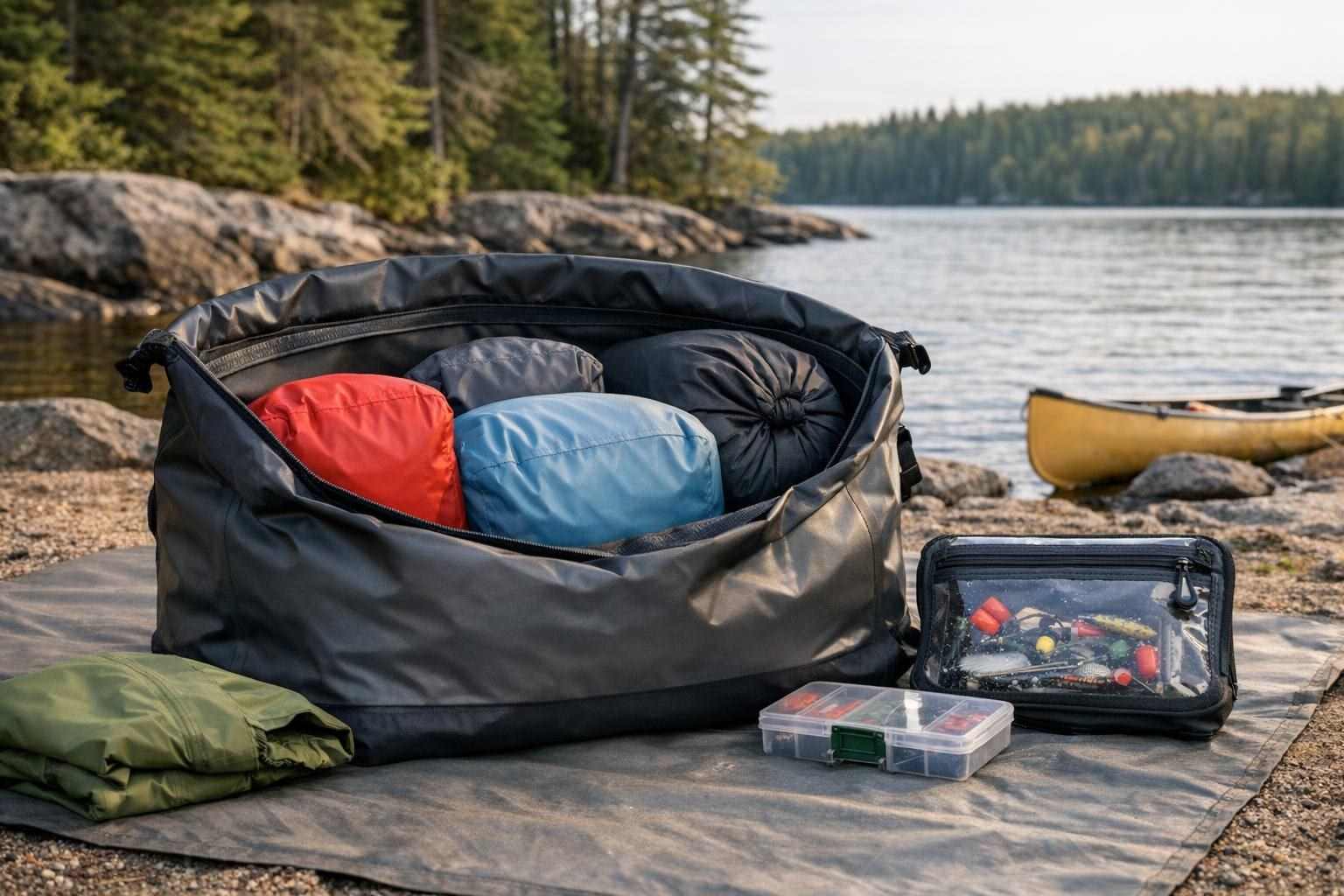
A mixed fishing and camping trip requires more than one large waterproof storage sack. Wet fishing tackle, bait residues, rain gear, food, clothes and sleeping gear all have different requirements and when mixed together even the smallest leak or muddy item can cause bigger problems. By using separate dry sacks for example, it is far easier to inspect, carry and re-pack the bags as required. The real question is what items require separate storage and how are you going to manage the storage system when your hands are cold, it is getting dark and you are trying to find room on the boat and at the campsite.
Start by separating clean, wet, and frequently used items
First separate clean items from wet items and items that you will need to use frequently. Keep clean clothing and sleeping layers separate from wet outerwear such as rain jackets. Keep dirty items like used towels, mud covered boots, used bait, fish residue covered items, etc. separate from the rest of your gear.
For clothing and personal items pack them in separate dry bags, ideally a smaller sack than you would normally use for the items, as when packed they will compress down. Sleeping bag(s) and other soft camp items should also be packed in separate dry bags. Note that in preparing your storage for a long weekend's fishing and camping the bag(s) for clothing, etc. can contain clothing for the whole weekend, packed in order, from top to bottom, so that the items for the later part of the weekend are at the bottom of the bag.
You must separate out in your storage the rain jacket that got damp but is clean, from the landing net or fishing gloves that got wet and are dirty. This is not a matter of them having been used on the shoreline.
Match each bag to the job it will do
Tall bags are good for storing clothing, sleeping bags, etc. as these items will compress inside the bag. Wider opening bags are better suited for storing tackle boxes, stove and camp kitchen equipment, etc. as these items will be easily identifiable whilst searching for something within the bag.
When it comes to objects that can easily get lost, like keys, permits, headlamps, batteries, and first aid kits as well as lighter pieces of tackle like small lures, hooks and line, and bait, consider packing them in the smallest object-sized dry bag available. (Inner dry bags can also serve to organize the inside of a larger dry bag.) And again, remember that there's no sense in packing an object-sized dry bag to store one wet item in it for the duration of the trip when that same item could be stored in a separately-packed, outer dry bag.
Just because something is included in your luggage does not mean it needs to be in the biggest waterproof sack you have. A bag that is too large often leads to an open and disorganized sack being left out in the rain, with items at the bottom of it becoming muddy.
Build a packing order that survives the trip
Pack your most used items at the top of the dry core of your camp gear such as a warm layer, your rain jacket, flashlight, water treatment, etc. Next pack clothing for the end of the weekend and keep your fishing tackle in a day-access bag for the relevant fishing days and keep it separate from your other camp gear.
Pack clothing in complete changes (e.g. a full change of tops, bottoms, undergarments, etc) rather than scattering out single items like shirts, socks, and trousers throughout the bag. It is easier to grab a full change for an emergency rather than having to rummage through the open bag which is likely to get dirty in the rain in the first place. Note that soft clothing items can be further organized within lightweight liners should you need to but avoid jamming them into a very small inner sack as it can be difficult to later extract individual items.
Hard-edged items should be stored away from soft apparel. Rods, tools, tackle etc. can easily penetrate or rub against soft bags whilst in transit. Where necessary, store items in cases to prevent damage. Check that lure points etc. are secure prior to storing in the tackle bag.
Give fishing gear its own rules
For fishing gear in particular it is good to have different categories. They can be the most dirty items in your luggage. The storage of fishing gear can be spread out to protect clean items, like spare line, fish finds, maps, licenses, spare small tools etc. Items that get dirty easily, like used lures, wet gloves, wet fishing boots, pliers, etc. should be allowed to dry before storage in a different compartment.
For items that stay dry but may get muddy or dirty such as spare line, small electronics for fish finders, GPS etc, and any maps, licenses, etc for fishing such as permits to fish etc, it is best to put these items in a clean inner pouch within the fishing bag such as a ziplock pouch. Used lures, wet gloves, landing net etc should be allowed to dry first before packing away in long-term storage.
Just before you close up the bag check for open lure hooks, rods that have been stored in a position where they could get damaged, and for damp clothes and containers that have not been fully sealed. Waterproof bags can keep the rain out but also keep the water in. Make sure you have the chance to dry out wet gear before you store it away for long periods.
Protect the dry core of camp gear
Keep clothing and sleeping bag storage away from the boat floor, muddy ground or where wet rain gear could be dropped and get dirty. If you have to set a bag down outside of your vehicle keep it on a clean groundsheet or other surface to prevent soiling of the clothing and sleeping bag storage.
Food items need to be stored apart from fuel, fire starters and cleaning products. Ensure all items are handled in accordance with the manufacturers instructions. Be sure to check the current park, municipal or provincial regulations with respect to storage and transport of such items. These change frequently and by season and by location.
Add another bag to store the smaller items you will need to set up your campsite. This bag can contain the rope, pegs, repair tape, spare batteries, hair clips etc. for personal hygiene. Remember this is different from your emergency or first aid kit.
Close, label, and inspect every bag
A waterproof bag can still leak if it is not closed correctly. Ensure that there is sufficient material at the top of the bag to allow for the closure to roll up or clip together. Check for trapped fabric, dirt etc. and for any straps that could be caught up in the opening of the bag. Make sure that you are using a Waterproof Storage Bag and not a Splash Resistant Bag – they have different uses.
Use simple labels to identify your bags. Choose tags that are easily read and as large as necessary. For example, label bags "Dry clothing", "Wet gear" and "Food" so their contents are easy to distinguish.